I’ve started to notice that the word “unprecedented” doesn’t carry much weight anymore. It shows up so often in organizations that it’s become part of the background noise. That alone should tell us something—uncertainty is no longer the exception; it is the environment we are operating in every day.
This realization sat at the core of my recent work and presentation, and it led me back to a distinction that continues to shape how I approach organization design: the difference between complicated and complex problems.
In my experience, we tend to treat most business challenges as if they are complicated. We assume the issue can be defined clearly, analyzed thoroughly, and solved with enough structure and expertise. And to be fair, that approach works well in certain situations. A budgeting process or a system implementation may be difficult, but with enough effort and the right skillsets, the path forward becomes clear.
However, much of the work we do in organization design does not behave this way. Leadership alignment, culture change, or shifting how teams collaborate rarely follow a predictable path. These challenges evolve as people react, interpret, and adjust. What feels true one week can shift the next. That is what I would describe as complex.
I’ve seen this play out repeatedly. Leaders invest heavily in detailed plans, future-state designs, and tightly managed rollouts. Yet despite all that effort, the outcomes often don’t match expectations. The issue is not a lack of competence or effort. It is that the system itself is dynamic, and the moment we intervene, it responds.
The turning point for me was recognizing that the problem was not always the design. It was how I was framing the problem. When I labeled something as complex rather than complicated, my approach changed. I became less focused on being right and more focused on understanding what was actually happening in real time.
We all have the ability to do this better than we think. If you reflect on how organizations adapted during COVID, it becomes clear that people can respond creatively when plans fall apart. Teams adjusted, leaders made decisions with incomplete information, and work continued in ways most of us would not have predicted.
What stands out to me is not how perfect those responses were, but how adaptable they were. That same adaptability exists in our day-to-day work if we can access it more intentionally.
For me, that starts with one simple shift: acknowledging when I am dealing with complexity and letting go of the need to control every variable. That shift creates room for curiosity, better questions, and ultimately better outcomes.
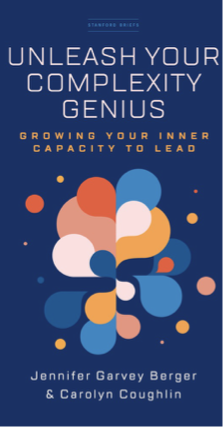
*This series of posts are from my presentation the Organization Design Forum 2026 Annual Conference based onJennifer Garvey Berger and Carolyn Couglin’s book “Unleash Your Complexity Genius”. In the next post, I will focus on two practices that have helped me do this more consistently—how I notice what is happening, and how I experiment in small ways to move work forward.
Note: This blog does not reflect the opinions of my employer.

